


Thursday, 06 December 2018 15:31
Identification and Assessment of Cognitive Dysfunction in Mental Disorders
HELLENIC PSYCHIATRIC ASSOCIATION CLINICAL WORKSHOP
Coordinator:
Dimitris Ploumpidis
Professor of Psychiatry, Chairman of the Hellenic Psychiatric Association
Trainers:
George Konstantakopoulos
Psychiatrist, MD, PhD
Scientific associate of the First Department of Psychiatry of the University of Athens & Institute of Psychiatry, Psychology and Neuroscience, King’s College London, UK
Nikoleta Ioannidi,
Clinical psychologist, MSc
Scientific associate of the First Department of Psychiatry of the University of Athens
Duration: 4 hours
Aim - Subjects:
In psychiatric practice and in clinical education respectively, cognitive deficits (related to memory, attention, judgment, etc.) have been closely associated with neurodevelopmental (learning difficulties) and neurodegenerative (dementia) disorders. However, contemporary research data has already documented the existence of cognitive dysfunction in a wide range of mental disorders as well as the great significance of this dysfunction in the occupational and social functioning of patients and, more generally, in their quality of life.
In schizophrenia, even when "positive" symptoms of the disease are effectively treated, most patients experience also cognitive symptoms, such as memory and attention dysfunction, information processing issues, problem solving issues, and issues with social contacts. In patients with bipolar disorder and chronic or recurrent major depression, similar cognitive problems are observed, more limited, but capable of causing significant functioning impairment.
The same is observed in the most chronic and severe types of anxiety disorders.
Therefore, improving cognitive functioning is an independent and important goal in the context of treatment. The modern psychiatrist must be able to clinically assess cognitive dysfunction, to monitor the effect of treatment, and to make appropriate therapeutic choices, or to direct the patient to a specific therapeutic treatment of the cognitive symptoms. The modern psychiatrist, therefore, needs to be aware of the effects of medication on cognitive functions and of the use of specific therapeutic techniques, such as cognitive remediation therapy and social skills training.
We now have the possibility to rapidly transfer to psychiatrists the main body of knowledge concerning:
- Cognitive functions and their assessment
- Cognitive impairment in specific mental disorders
- The effect of current medication on cognitive functions and the appropriate treatment options
- The indications, principles and result of specific interventions for cognitive dysfunction.
The Clinical Workshop is addressed to psychiatrists, clinical psychologists and other mental health professionals who work with patients with psychoses and affective disorders.
The purpose of the Clinical Workshop is to adequately train clinicians in order for them to be able to reliably assess patients' cognitive dysfunction, monitor their progression during the course of therapy, and use special interventions in therapeutic planning. Participants will become familiar with specific methods and tools which will provide them the expertise for this clinical assessment.
In particular, the reinforcement of psychiatrists will be pursued in the clinical workshop through the following means:
- Provision of basic knowledge on the clinical manifestations, significance and prognosis of cognitive dysfunction in mental disorders: schizophrenia, bipolar disorder and depression.
- Presentation of the modern means of treatment for cognitive dysfunction in patients with mental disorders.
- Presentation of all available methods for the detection and reliable assessment of cognitive dysfunction in mental disorders, through clinical examination, questionnaires, scales and neuropsychological bedside tests.
- Training in brief modes of cognitive functioning assessment and monitoring.
- Presentation of special printed Guides.
TRAINING PROGRAM
1st part: COGNITIVE FUNCTIONS WHICH ARE IMPAIRED IN MENTAL DISORDERS
2nd part: COGNITIVE DYSFUNCTION IN MENTAL DISORDERS
- A) Schizophrenia
- B) Bipolar disorder
- C) Major depression
3rd part: TREATMENT OF COGNITIVE DYSFUNCTION IN SCHIZOPHRENIA, BIPOLAR DISORDER AND MAJOR DEPRESSION
- A) Pharmaceutical treatment
- B) Non-pharmaceutical treatments
4th part: DETECTING AND ASSESSING COGNITIVE DYSFUNCTION
- A) Detecting and assessing via a clinical interview
Cognitive Functions Check-list
- B) Clinical assessment with the use of scales and questionnaires
Perceived Deficits Questionnaire - Depression (PDQ-D)
- C) Neuropsychological Assessment
Brief Cognitive Assessment Tool for Schizophrenia (B-CATS)
5th part: TRAINING IN THE ASSESSMENT OF COGNITIVE DYSFUNCTION WITH THE USE OF CLINICAL CASES
- A) Assessment and follow-up in major depression with PDQ-D
- B) Assessment and follow-up in psychoses with the use of B-CATS
“The clinical training course has already been held as a pilot and will be repeated within the context of the program of the Hellenic Psychiatric Association which will be implemented with the sponsorship of MYLAN.”
Published in
Clinical Workshops
Tagged under
Thursday, 06 December 2018 15:30
Immediate Reaction to Depression: Diagnosis and Therapy in Primary Health Care
HELLENIC PSYCHIATRIC ASSOCIATION CLINICAL WORKSHOP
Coordinator:
Dimitris Ploumpidis
Professor of Psychiatry, Chairman of the Hellenic Psychiatry Association
Trainers:
George Konstantakopoulos
Psychiatrist, MD, PhD
Scientific associate of the First Department of Psychiatry of the University of Athens & Institute of Psychiatry, Psychology and Neuroscience, King’s College London, UK
Nikoleta Ioannidi
Clinical psychologist, MSc
Scientific associate of the First Department of Psychiatry of the University of Athens
Duration: 3 hours
Aim - Subjects:
Depression and anxiety disorders are the most common diseases in economically developed countries and the dysfunction they cause to patients is extremely important. It is estimated that in 2030, depression will be the main cause of disability worldwide. In addition, depressive and anxiety disorders often accompany a variety of physical illnesses the development and prognosis of which are significantly affected by it.
A large number of patients with mental disorders are increasingly using health services regardless of the co-existence or absence of physical illnesses. In particular, depression is the third most common cause, among both physical and mental illnesses, for seeking primary health care services. Patients with depression are estimated to reach out to doctors of specialties other than psychiatry by a rate of 70-80%. However, according to relevant studies, the identification rates of depression and anxiety in Primary Health Care settings are particularly low (36-56% and 15-36%, respectively). As a result, about half of the patients suffering from depressive and anxiety disorders remain undiagnosed and therefore untreated.
This clinical workshop focuses on addressing this major issue of public health. The ability to diagnose and treat depression within the context of Primary Health Care must be reinforced. Primary care physicians must be appropriately trained in order to be able to diagnose and treat depression, while distinguishing the cases they must refer to an expert. Appropriate methods and tools in order to facilitate primary care physicians in this task have been developed in recent years in many countries with well-organized health systems. This clinical workshop is part of an effort to develop a specific methodology and to provide appropriate training for physicians in our country as well.
The clinical workshop is addressed to general practitioners and doctors of specialties other than psychiatry who work in Primary Health Care services.
The purpose of the Clinical Workshop is to adequately train primary health care physicians in order for them to be able to diagnose and treat depression, while distinguishing the cases that they must refer to an expert. Participants will familiarize with methods and tools that facilitate primary care physicians in this task.
In particular, the reinforcement of primary care physicians will be pursued in the clinical workshop through the following means:
- Provision of basic knowledge on the epidemiology, clinical manifestation and prognosis of depression
- Training in brief mode of detection of depression by identifying risk factors and addressing only two questions to the patient
- Presentation of a method for the diagnosis, clinical assessment and therapeutic planning of depression
- Training in the use of a short questionnaire for the diagnosis and monitoring of depression (PHQ-9) and of a short questionnaire for the assessment and monitoring of anxiety (GAD-7)
- Short training in treatment, monitoring of therapeutic response and management of medication
- Presentation of special printed Guides
TRAINING PROGRAM
1st part: INTRODUCTION
Α) Depression: Epidemiological data and consequences:
- B) The Issue: Detection - Diagnosis and Treatment in Primary Health Care
- C) Clinical manifestations, clinical types and prognosis of depression
2nd part: DETECTION AND DIAGNOSIS OF DEPRESSION IN PRIMARY HEALTH CARE
Α) The patient with depression in Primary Health Care: “Red Flags”:
- B) A brief mode of detection of depression
- C) Diagnosis and clinical assessment with the use of PHQ-9.
- D) Training in detection and diagnosis (vignettes - discussion)
3rd part: ADDITIONAL KNOWLEDGE FOR DIAGNOSIS AND CLINICAL ASSESSMENT
Α) Differential Diagnosis - Useful tools
Β) Suicidal risk assessment
- C) Assessment of concurrent anxiety with the use of GAD-7
- D) Training in suicidal risk and anxiety assessment (vignettes - discussion)
4th part: TREATMENT OF DEPRESSION IN PRIMARY HEALTH CARE
Α) Therapeutic options
Β) Antidepressant medication
- C) Assessment of the therapeutic response with the use of PHQ-9 and GAD-7
- D) Strategies for handling difficulties - management of pharmaceutical treatment
- E) Therapeutic goals – maintenance therapy
- F) Training in patient follow-up (vignettes - discussion)
“Clinical workshops during the years 2015 and 2016 were provided free of charge within the context of a program of the Hellenic Psychiatric Association, which was implemented with the sponsorship of MYLAN.”
Published in
Clinical Workshops
Tagged under
Saturday, 27 July 2019 11:00
Training Course in Clinical Psychopathology “PANAGIOTIS OULIS”
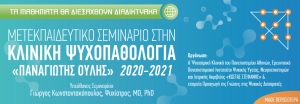
Academic year: 2020-2021
The training course in Clinical Psychopathology has gained wide recognition thanks to the long and inspiring effort of Panagiotis Oulis and is now conducted by a group of his students, under the supervision of the psychiatrist George Konstantakopoulos.
The course comprises the following main parts:
Theoretical part:
Teaching of the basic psychopathological concepts of clinical signs and symptoms as well as the clinical syndromes within the context of which they occur.
Clinical part:
Students are invited to apply the concepts learned to clinical cases, trying to identify symptoms and justify the application of clinical psychopathological concepts (psychopathological analysis) and to form and justify their final diagnosis (differential diagnosis). The most appropriate categories of therapeutic interventions for each clinical case should also be outlined.
Organization:
First Department of Psychiatry of University of Athens, University Research Institute of Mental Health, Neuroscience and Medical Precision "Kostas Stefanis" (EPIPSY) & Society for the Promotion of Knowledge in Mental Disorders.
Duration:
One academic year (76 academic hours)
Scientific Committee:
Charalampos Papageorgiou: Professor of Psychiatry, Head of the First Department of Psychiatry
Dimitris Ploumpidis: Emeritus Professor of Psychiatry, First Department of Psychiatry
Eleftheria Tsalta: Professor of Psychiatry, First Department of Psychiatry
Anna Kokkevi: Emeritus Professor of Psychiatry, University of Athens, Supervisor of the Drug Dependence and Relevant Research and International Collaborations Division, EPIPSY
George Konstantakopoulos: Psychiatrist, First Department of Psychiatry of University of Athens & University College London, UK
Course supervisor:
George Konstantakopoulos
Starts:
October 2020
Cost of participation:
€600.00
Information:
www.epipsi.gr, psychopathology.gr
Registration:
This email address is being protected from spambots. You need JavaScript enabled to view it. and copy This email address is being protected from spambots. You need JavaScript enabled to view it.
Applications accepted until 30 September 2020
The course will be conducted online with lessons via video conferencing and e-learing on the website of Psychopathology.gr. The lessons will take place every Thursday at 6:00 - 8:00 PM (Group A) or at 8.00 - 10.00 PM (Group B).
The course is aimed at Mental Health professionals (psychiatrists, psychologists, social workers, nurses, health visitors) and at graduates of relevant academic departments.
The candidates are chosen following an assessment (priority order by affinity of studies and job).
For the completion of the course, participants will have to attend the lessons and succeed in exams (in theoretical part, medical history analysis and children and adolescents' psychopathology).
Upon successful completion of the course a certificate of participation is granted.
Published in
Training Courses
Tagged under
Saturday, 27 July 2019 11:00
Training Course in Clinical Skills in Psychopathology “PANAGIOTIS OULIS”
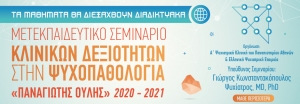
Academic year: 2020-2021
At the Clinical Skills in Psychopathology Course students learn basic principles and practice special tools of clinical examination, differential diagnosis and therapeutic planning for the practice of clinical psychopathology (clinical psychiatry, clinical psychology, psychosocial rehabilitation). The curriculum includes both lectures and clinical material (vignettes, audiovisual material and patient history) on all subjects taught.
The course comprise of the following main parts:
General part:
Teaching of general methodology and basic clinical skills necessary in clinical practice (indicative subjects: structure and techniques of clinical interviews, general organization and special issues of psychological and personality examination, general rationale and special issues of psychopathological differential diagnosis, therapeutic interventions for mental disorders and personalized therapeutic planning). Students will also practice special clinical tools such as clinical scales, bedside tests, report writing.
Specialized part:
Applying clinical skills to the clinical examination, assessment, diagnosis and treatment per nosological category (groups of mental disorders). Teaching of modern nosology, diagnostic criteria, special issues in differential diagnosis, therapeutic planning. Students are invited to apply the clinical skills taught to clinical cases, aiming at an accurate diagnosis and optimal therapeutic planning.
Teaching team:
This course is carried out by a group of students of Panagiotis Oulis, under the supervision of the psychiatrist George Konstantakopoulos. The supervisor and the teaching team have been conducting the annual course in Clinical Psychopathology "Panagiotis Oulis” for many years now, which is co-organized by the First Department of Psychiatry and the University Research Institute of Mental Health. Some special topics are also taught by members of the First Department of Psychiatry and other experts.
Course supervisor:
George Konstantakopoulos, Psychiatrist, First Department of Psychiatry of University of Athens & University College London, UK
Organization:
First Department of Psychiatry of University of Athens & Hellenic Psychiatric Association
Duration:
One academic year (88 academic hours)
The course will be conducted online with lessons via video conferencing and e-learing on the website of Psychopathology.gr.
The Course's schedule will include 4-hour lessons which will be held during one weekend per month (one lesson on Saturday and another one on Sunday, 10:00AM - 2:00 PM) - two 4-hour lessons (two weekends) in January and June. The final schedule will be provided to eligible students at the beginning of October.
Starts:
October 2020
Cost of participation:
€800.00
Information:
psychopathology.gr, This email address is being protected from spambots. You need JavaScript enabled to view it.
Registration:
This email address is being protected from spambots. You need JavaScript enabled to view it.
Applications accepted until 30 September 2020
The following are eligible for the course:
- Graduates of the training course in Clinical Psychopathology “Panagiotis Oulis” of the First Department of Psychiatry of University of Athens & University Research Institute of Mental Health.
- Psychiatrists and interns at the last 2 years of their internship.
- Holders of a postgraduate diploma in Clinical Psychology.
- Mental health professionals, working in clinical settings for several years.
Candidate students should be aware that a good knowledge in English language is required to attend the training course.
The selection of candidates is made on the basis of the above criteria and by order of priority (date of application submission).
For the successful completion of the course, participants must attend the lessons and complete a dissertation.
Upon successful completion of the course a certificate of participation is granted.
Published in
Training Courses
Tagged under
Sunday, 02 December 2018 19:27
Top news: Psychopathology.gr is here!

We envisioned it for the past two years, while organizing and implementing courses and clinical workshops.
Our students have repeatedly asked for more information and access to educational material.
For long time we have been planning to take a step forward in the training of psychiatrists, psychologists and other mental health professionals.
Published in
News
Tagged under
 First Department of Psychiatry of the National and Kapodistrian University of Athens, Eginition Hospital
 University Research Institute of Mental Health
 Hellenic Psychiatric Association
 Pro-noesis
 obrela.gr
Sunday, 02 December 2018 19:19
Other teachers
TEACHERS 2015-16
Annual Course in Clinical Psychopathology “PANAGIOTIS OULIS”
|
Pentagiotissa Stefanatou Psychologist, MSc, PhD |
Personality Disorders |
|
Athanasia Liozidou Clinical Neuropsychologist, MSc |
Disorders of Attention, orientation and memory disorders - Neuropsychological Tests - Neurocognitive Disorders |
|
Christos Istikoglou Psychiatrist, MD, MSc |
Case presentation |
|
Dimitris Kontis Psychiatrist, MD, PhD |
Case presentation |
|
Stefanos Dimitrakopoulos Psychiatrist, MD |
Case presentation |
TEACHERS 2016-17
Annual Course in Clinical Psychopathology “PANAGIOTIS OULIS”
|
Pentagiotissa Stefanatou Psychologist, MSc, PhD |
Personality Disorders |
|
Grigoris Skarakis Psychiatrist, MD |
Case presentation |
|
Yiannis Chasalevris Psychiatrist, MD |
Case presentation |
Annual Course in Clinical Skills in Psychopathology “PANAGIOTIS OULIS”
|
Iraklis Mourikis Psychiatrist, MD, PhD |
Obsessive - compulsive disorder Cognitive - behavioral therapy |
|
Georgios Chatzistavrakis Psychiatrist, MD, PhD |
Psychoanalysis and psychoanalytic psychotherapy Personality Disorders |
|
Rossetos Gournelis Associate Professor of Psychiatry |
Systemic Therapy |
|
Marina Ekonomou Associate Professor of Psychiatry |
Psychoeducation - Family interventions |
|
Dimitris Ploumpidis Professor of Psychiatry |
Psychosocial rehabilitation |
|
Grigoris Skarakis Psychiatrist, MD |
Case presentation |
|
Stamatina Kalogeratou Psychologist, MSc |
Cognitive deficits in mental disorders |
|
Theodoros Papaslanis Psychiatrist, MD |
Ethics and deontology - Forensic Psychiatry issues |
TEACHERS 2017-18
Annual Course in Clinical Psychopathology “PANAGIOTIS OULIS”
|
Pentagiotissa Stefanatou Psychologist, MSc, PhD |
Personality Disorders |
|
Grigoris Skarakis Psychiatrist, MD |
Case presentation |
|
Stefanos Dimitrakopoulos Psychiatrist, MD |
Case presentation |
|
Evangelia Psara Psychiatrist, MD |
Case presentation |
|
Vasilis Natsis Intern Psychiatrist |
Case presentation |
Annual Course in Clinical Skills in Psychopathology “PANAGIOTIS OULIS”
|
Iraklis Mourikis Psychiatrist, MD, PhD |
Obsessive - compulsive disorder Cognitive - Behavioral Therapy |
|
Georgios Chatzistavrakis Psychiatrist, MD, PhD |
Psychoanalysis and psychoanalytic psychotherapy Personality Disorders |
|
Rossetos Gournelis Associate Professor of Psychiatry |
Systemic Therapy |
|
Marina Ekonomou Associate Professor of Psychiatry |
Psychoeducation - Family interventions |
|
Dimitris Ploumpidis Professor of Psychiatry |
Psychosocial rehabilitation |
|
Grigoris Skarakis Psychiatrist, MD |
Case presentation |
|
Stamatina Kalogeratou Psychologist, MSc |
Cognitive deficits in mental disorders |
|
Theodoros Papaslanis Psychiatrist, MD |
Ethics and deontology - Forensic Psychiatry issues |
Published in
Who we are
Tagged under
Wednesday, 05 December 2018 13:43
Christina Simoudi
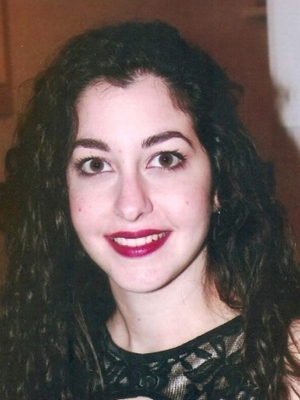
Born in Athens in 1990. She studied psychology at the Panteion University of Social and Political Sciences and graduated in February 2013. Since 2014, she holds a license to practice as a psychologist. In July 2018, she completed the MSc Program "Clinical Neuropsychology - Mental Neurosciences" of the Medical School of the University of Athens in collaboration with the Montreal Neurological Institute (MNI), McGill University.
She has been trained in Psycho-Educational Interventions – Behavioral Family Therapy in Psychosis (EPIPSY) and she is completing her training in Cognitive Behavioral Therapy (EPIPSY – Hellenic Society of Cognitive Psychotherapies). She has also attended the annual Course in Counseling Psychology (Panteion University) and during the academic year 2013-2014, she attended the Course in Clinical Psychopathology, which she graduated from with honors and was selected to continue her training in the context of an internship at the Byron-Kessariani Community Mental Health Center of the First Department of Psychiatry of the University of Athens for the academic year 2014-2015.
From 2014 until the end of 2016 she worked pro bono as scientific associate at Byron-Kessariani Community Mental Health Center (Department of Adult Psychiatry), providing clinical work and participating in research activities. During her MSc studies, she completed an internship as neuropsychologist at Byron-Kessariani Community Mental Health Center (Department of Adult and Child Psychiatry) and at First Department of Neurology of the University of Athens (Eginition Hospital). She work as a psychologist, while in the past she was a volunteer at the Chronic Disease Care Center of Eastern Athens and, during her bachelor studies, she completed an internship at the Day Center for Adolescents with Autism in Western Attica, "Stin Avli tou Kosmou".
Since October 2016, she has been a member of the teaching team of the Course in Clinical Psychopathology "Panagiotis Oulis" of the First Department of Psychiatry of the University of Athens and the University Mental Health, Neurosciences and Precision Medicine Research Institute "COSTAS STEFANIS" (EPIPSY). She is also a member of the teaching team of the Course in Clinical Skills in Psychopathology "Panagiotis Oulis" of the First Department of Psychiatry of the University of Athens and the Hellenic Psychiatric Association.
She has participated in research studies, which has been presented (posters and speeches) at Greek and international conferences, while she is also co-author of books on substance dependence and psychotherapeutic intervention.
Published in
Teaching Team
Tagged under
Sunday, 02 December 2018 19:14
Efthymia Liakou

She was born in Deskati, Grevena. She studied psychology at the National and Kapodistrian University of Athens and graduated in 1993. She has been trained in Person-Centered approach and Cognitive Behavioral Therapy. She has also trained in the treatment and social rehabilitation of juvenile delinquents and in the planning of psychosocial support for victims of trafficking on a national and international level. She holds a MSc Degree in Organizational and Economic Psychology from the Panteion University and is a PhD candidate in the Department of Psychology, also at the Panteion University.
She worked as a psychologist in 2005 in adaptation and housing centers for people with disabilities and mental disorders. She was a member of a trans-European committee with the goal to investigate training and autonomous living programs of people with disabilities in Austria, France and Germany and their implementation in Greece.
From 2006 until today, she has been working as a psychologist at her private practice. At the same time, from 2009 until now, she has been a member of the teaching team of the Course in Clinical Psychopathology "Panagiotis Oulis" of the First Department of Psychiatry of the University of Athens and the University Research Institute of Mental Health (EPIPSY).
Published in
Teaching Team
Tagged under
Sunday, 02 December 2018 19:13
Eleni Anyfanti
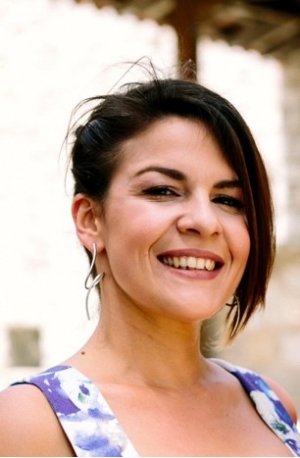
She studied Psychology at the University of Crete. Since 2008, she has been at the Eginition Hospital, at the Experimental Psychology Laboratory, under the supervision of Associate Professor E. Tsalta, and has been systematically involved in neuropsychological research and, in particular, in research concerning the neuropsychological profile of various psychiatric disorders with emphasis on depression, obsessive compulsive disorder, bipolar disorder and other psychopathological entities. Her research is based on both clinical data and experimental data from rats. She has been trained in clinical psychopathology at the Short-term Hospitalization Unit of the First Department of Psychiatry of the University of Athens since 2008 and at the Course in Clinical Psychopathology taught by the Associate Professor P. Oulis. As a valedictorian of the course and enrolled student of the MSc Program in Clinical Neuropsychology of the First Department of Neurology of the University of Athens, in 2009, she joined the teaching team of the course with her subjects being Neuropsychology and Psychopathology.
In 2010, she attended a 3-month training as an intern neuropsychologist at the University of Texas Health Science Center in Houston, Texas, USA, under the supervision of Assistant Professor J. Largen at the Houston Neuropsychology Group. In 2011, she received a MSc Degree in Clinical Neuropsychology from the Medical School of the University of Athens in collaboration with the University of Texas. Since 2013, she has been teaching in undergraduate courses at the Psychology Department of the Panteion University and at the Medical School, as well as postgraduate and MSc programs at the Medical School and the Department of Primary Education of the National and Kapodistrian University of Athens.
Since 2015, she has been working on her PhD thesis at the Medical School on the subject of neuropsychology and experimental psychology. Since 2016, she has been a University Scholar of the Medical School in the First Department of Psychiatry at the Eginition Hospital with the educational and research subject of psychology. She is a member of the Board of Directors of the Hellenic Neuropsychological Society and one of the founding members. She also works as a psychologist at her own private practice, while completing her education in Cognitive Behavioral Therapy. To date, she has published her work in 4 international scientific journals and has presented 10 studies at international and Greek conferences.
Published in
Teaching Team
Tagged under